Becoming an entrepreneur: why knowing your worth is important

Grow London Local
Posted: Thu 16th Jul 2026
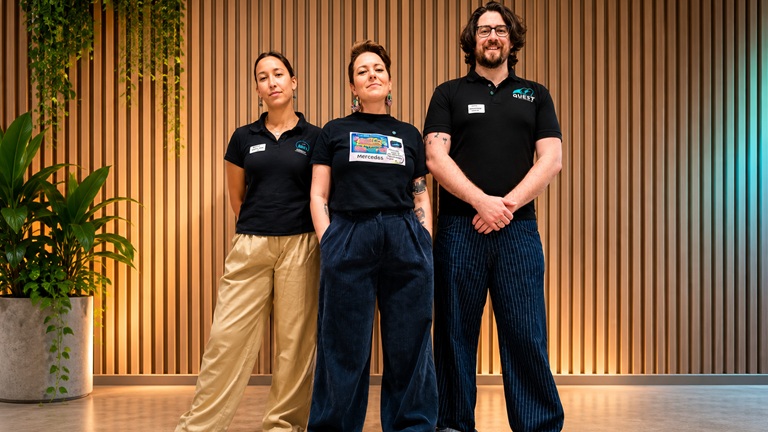
Founded by former teacher and actor Mercedes Yearley, Quest Soul Theatre C.I.C delivers inclusive creative arts workshops designed to spark positive wellbeing through play, creativity and community.
What began as a response to Mercedes' own mental health journey has grown into a thriving community-led business shaped by her lived experience as a disabled female founder.
Here, Mercedes shares the inspiration behind Quest, the challenges of building a community-focused business and how Grow London Local has supported her journey.
Tell us about yourself and Quest Soul Theatre.
I'm Mercedes, founder of Quest Soul Theatre, which delivers inclusive and accessible creative arts workshops designed to support positive wellbeing.
We currently run weekly drama classes across Bromley and Croydon, alongside Dungeons & Dragons groups, a monthly creative arts café and a range of workshops.
What makes our drama classes different is that there's no end performance. There are no auditions, no line learning and no ego.
It's simply a space for people to come together, play, be creative and connect with others. The focus is on wellbeing, community and creating an in-person space where people feel safe and included.
What inspired you to start Quest?
The idea came from my own mental health journey.
During a difficult period in my life, I attended wellbeing groups and classes, but I realised drama was the one thing that genuinely helped me.
A lot of wellbeing spaces focus on calmness and quietness, but I wanted to show that wellbeing can also be loud, playful and messy.
For some people, creativity, drama and play are far more effective ways to connect and process emotions.
I wanted to create a class where adults could experience drama like we did at school – just coming together to play and be creative without pressure or performance.
I started with one class a week. At first, only a few people came regularly, but I kept going because I could see the impact it was having.
Now, we have full classes of up to 15 or 20 people, and Quest has grown into a real community.
Why did you choose to structure your business as a CIC?
Quest is a community interest company (CIC), which means the business is designed to create positive social impact alongside generating income.
Accessibility and community wellbeing are central to what we do, so I wanted to build something that prioritised inclusion rather than just profit.
A lot of the people who attend our classes rely on that regular support, and many wouldn't be able to access the workshops without subsidised spaces or funding support.
Structuring Quest as a CIC has allowed us to apply for funding and continue making the classes accessible to the people who need them most.
What have been some of the biggest challenges since starting your business?
One of the biggest challenges has been sustainability. We've received funding from organisations including the National Lottery and Mind, but funding applications can be incredibly difficult.
You often have only a small number of words to explain your entire impact on the community, and every funding bid is different. It's a constant balancing act between keeping the business sustainable while making the workshops accessible.
Running a business while navigating ADHD and bipolar disorder has also brought challenges.
Coming from a creative and teaching background rather than a business background, I suddenly found myself needing to understand finance, admin, safeguarding, marketing and paperwork all at once, which was overwhelming at times.
But I've learned that nothing has to be perfect. The important thing is asking for help when you need it and understanding your own limits.
How did you first hear about Grow London Local and what support did you receive?
I first connected with Grow London Local while taking part in a business incubator programme with Impact Hub London called Together for Wellbeing.
At one of the networking events, I gave a short presentation about Quest and met Marie-Francoise, a Business Support Manager, afterwards.
Marie really understood what I was trying to build and stayed in touch throughout the process. She referred me to several support providers and training opportunities, including marketing skills support through Capital City College.
At the time, I was quite overwhelmed and couldn't take on every opportunity, but even knowing the support was there made a huge difference.
What impact did that support have on your business?
The biggest impact was knowing there was ongoing support available when I needed it.
Marie regularly checked in with me and understood that I was struggling at times, which made me feel supported rather than isolated.
The support also helped me understand the importance of networking and visibility.
I've since spoken at a Grow London Local event about my journey as a founder, which helped build my confidence and connect with other entrepreneurs facing similar challenges.
What's next for Quest?
We're currently developing a series of workshops for businesses focused on team building, wellbeing and innovation through drama and play.
The aim is to show how creative techniques can strengthen communication, trust and collaboration within teams.
We're also developing schools programmes that encourage young people to build confidence, creativity and leadership skills by creating and running their own clubs, podcasts or projects.
As AI and digital technology continue to grow, I think people will increasingly seek out real human connection and in-person creative experiences.
I believe spaces like Quest will become even more important in helping people connect, communicate and support their wellbeing.
Finally, what advice would you give to other aspiring business owners?
Ask for help. That's the biggest thing I've learned.
If you have a disability, additional need or simply feel overwhelmed, it's important to understand your limits and communicate where you need support. Nobody can be good at everything, especially when starting a business on their own.
I'd also say, don't wait for everything to be perfect before you begin. You learn as you go. Most business owners are figuring things out along the way, even if it doesn't always look like it.
And finally, know your worth. Don't be afraid to charge properly for what you do. So many people start by undervaluing themselves, but your work, skills and ideas have value.
Other Grow London Local success stories

Book a free consultation with a Business Support Manager
Need help finding support for your business? Our Business Support Managers are here to help. Fill in a short form and we'll get back to you within two working days. Arrange your consultation now
Grow London Local
Disclaimer: The content provided on this site, whether by Grow London Local or by third parties, is by way of general guidance only. Grow London Local does not accept any liability for any loss or damage that any person incurs as a result of any content on this site. Please note that where you purchase paid services or content from third parties, your agreement is solely with those third parties.